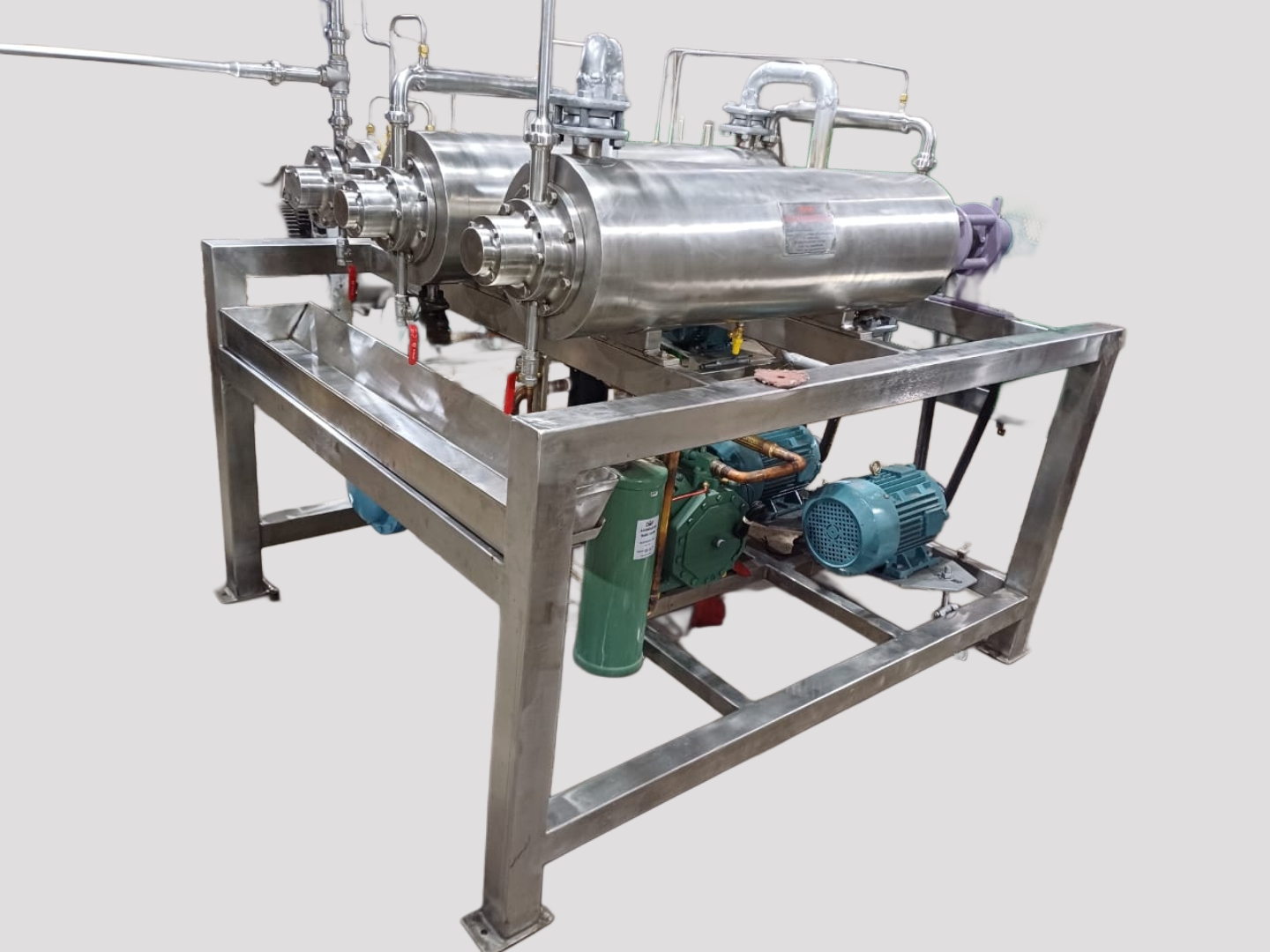
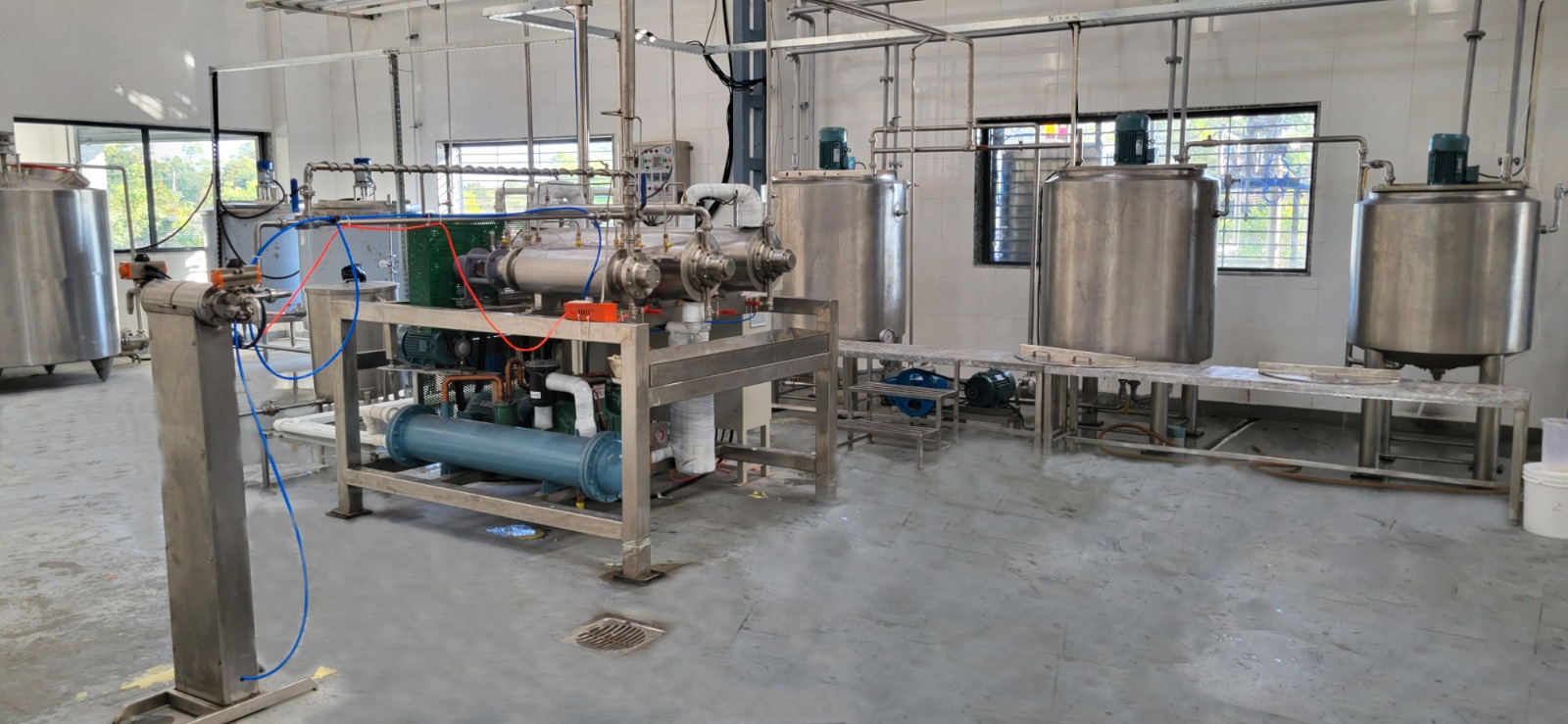
Table Margerine


Table Margarine Plants

Table Margarine Plants with production capacities ranging from 300 kg/hr to 1000 kg/hr. Our machines are designed for high efficiency and consistent product quality, while also being energy-efficient, consuming less electricity compared to conventional systems. Ideal for various production scales, our margarine plants offer reliable performance, low operational costs, and easy maintenance.
  • Descripton
  • Technical Features
  • Advantages

1. Raw Materials Preparation

TANK1:

Oils and Fats: Different oils (like palm oil, soybean oil, or sunflower oil) are mixed to achieve the desired fat blend.

TANK2:

Water Phase: Water, salt, emulsifiers, and other additives (like preservatives and flavor) are prepared.

TANK3:

Material of tank1 and tank2 are mixed in tank3.

2. Oil and Water Emulsification

The oil phase and water phase are heated separately.

Both are mixed together in an emulsification tank.

The mixture is homogenized to ensure proper blending and fine emulsion (usually oil-in-water).

3. Cooling and Crystallization

The emulsion is passed through a chiller (scraped surface heat exchanger).

Rapid cooling forms small fat crystals, giving margarine a smooth texture.

4. Kneading and Texturizing

The cooled margarine is worked (kneaded) to develop proper texture.

Additional ingredients like flavoring or color can be added at this stage.

5. Packaging

The finished margarine is filled into tubs, wrappers, or blocks.

Packaging is sealed and labeled.
Process Flow Summary:

Raw oils + Water phase → Emulsification → Cooling (Crystallization) → Kneading → Packaging

  • Material: High-grade SS 304 / SS 316 (Food-grade stainless steel)
  • Automation:Fully automatic or semi-automatic options available
  • Power Supply:Energy-efficient models with low electricity consumption
  • Control Panel: Digital or PLC-based for precise control and monitoring
  • Capacity Range:Customized capacities from 300kg/hr to 1000kg/hr(kilogram per Hour)
  • High Yield with Consistent Quality
  • Easy Cleaning & Maintenance
  • Low consumes of electricity
  • Low Operating Costs
  • Hygienic and GMP-Compliant Construction